How to Avoid Overpaying for Palace Amenities: A 2026 Heritage Guide
The commercial monetization of historical architecture has created a unique micro-economy within the luxury hospitality sector. Palatial properties—whether converted European castles, former princely estates in Asia, or historic urban residencies—operate on an economic model that relies heavily on ancillary revenue. While the base room rate at these institutions is notoriously substantial, it is frequently the layered cost of secondary services, private experiences, and structural provisions that inflates the final ledger of a residency. This phenomenon is not accidental; it is a calculated pricing mechanism designed to capture consumer surplus from a captive audience.
The Psychological Premium of Historic Spaces
Navigating this secondary marketplace within a heritage asset requires an analytical approach that treats the stay as an unbundled collection of distinct services. The Psychological Tax of Arbitrary Pricing: Recognize that internal pricing structures—such as equating a continental breakfast to a multi-course external dinner—function as an intentional ‘Psychological Tax.’ This surcharge creates a state of perpetual fiscal vigilance, eroding the value of the ‘Sovereign’ experience by forcing the guest to constantly audit the legitimacy of every amenity. The grand architecture, high ceilings, and historical significance serve as an aesthetic justification for what is often an extreme inflation of functional value. To interact with these spaces efficiently, one must decouple the romantic allure of the physical structure from the transactional reality of its operations.
The Algorithmic Shift in Heritage Hospitality
In 2026, the institutional landscape of the palace hotel segment has become increasingly consolidated under global luxury conglomerates. This institutional shift has brought sophisticated algorithmic yield management practices to the historically bespoke world of heritage hospitality. Services that were once offered as gestures of hospitality to esteemed guests are now structured as high-margin “experiences.” Consequently, avoiding unnecessary financial leakage requires a systematic understanding of hotel operations, procurement structures, and corporate leverage points rather than superficial bargaining or standard consumer discounts.
This analysis establishes a rigorous framework for audits and behavioral adjustments designed to preserve capital while maintaining the authentic utility of a historic stay. By moving beyond conventional consumer financial advice, we will deconstruct the operational architecture that drives up the cost of internal amenities. This definitive reference examines the historical origins of auxiliary pricing, introduces operational mental models, analyzes real-world situational failures, and provides a structured methodology for auditing ancillary expenditures before they compromise the financial efficiency of a luxury travel deployment.
Understanding “how to avoid overpaying for palace amenities”
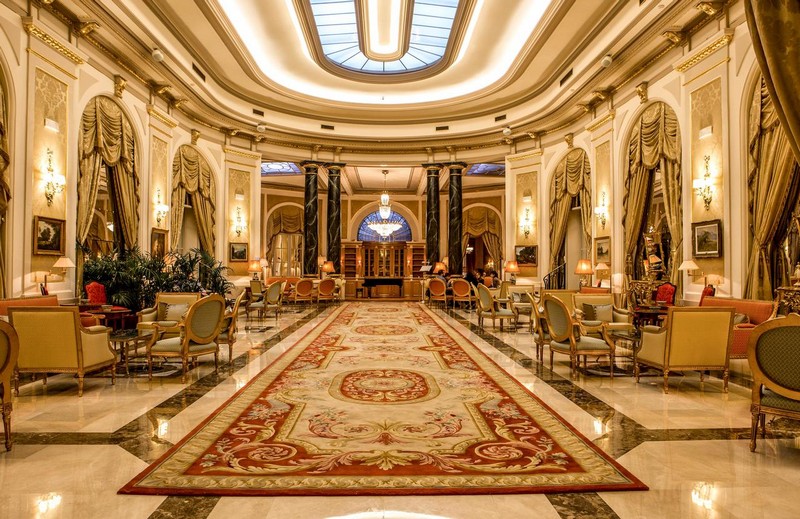
The ‘Aura Surcharge’ Fallacy: Recognize the cognitive vulnerability inherent in grand architecture. The assumption that service rendered beneath a 17th-century fresco possesses superior utility is a psychological bias, not an economic reality. You must decouple the atmospheric value of the setting from the commodity value of the service to reject the 400% markup. In practice, the water in the bottle, the ingredients in the club sandwich, and the fuel in the airport transfer vehicle are identical to those found outside the estate walls.
The Multi-Perspective Divergence
From an asset management perspective, the internal inflation of amenity prices is a structural necessity to offset the astronomical overhead of historic building preservation. Stone masonry maintenance, textile conservation, and the heating of massive, uninsulated volumes cannot be funded by room rates alone. Therefore, the internal outlets (spas, restaurants, transport desks) operate as intense profit centers to subsidize the primary fabric of the monument.
From a corporate travel perspective, these amenities represent a high-friction zone where non-transparent costs accumulate rapidly. A failure to institute strict pre-clearance protocols for auxiliary services can cause the ancillary ledger to exceed the base reservation cost by a factor of two. Understanding the operational logic of these properties allows corporate and private entities to establish boundaries that protect capital without diminishing the core experiential asset of the stay.
Oversimplification and the “Aura Trap”
The primary risk of oversimplification is the “Total Abstinence Fallacy”—the assumption that the only way to minimize these costs is to refuse every internal service. This approach degrades the stay, turning an intended luxury asset into a logistical chore. The objective is not to avoid spending entirely, but to identify the “Value Disconnect.” This occurs when an internal service incurs a luxury premium but provides only a commodity utility, such as laundry services or basic ground transportation.
The Economic Anatomy of Ancillary Revenue in Heritage Properties
The institutional structure of palace hotels evolved from the aristocratic household model, where hospitality was a unilateral display of wealth and prestige. The ‘Bundled Legacy’: During the late 19th and early 20th centuries, grand estates transitioned into elite commercial hotels by adopting a bundled pricing architecture. This historical model, designed to capture all capital within the estate walls, remains the structural DNA of modern captive-audience extraction strategies. A single daily rate typically included the room, meals, stable use, and the personal attention of a dedicated domestic staff.
The late 20th-century professionalization of the hospitality industry dismantled this model in favor of “Unbundled Ancillary Extraction.” Under The ‘Acquisition-to-Extraction’ Shift: Revenue management protocols treat the base room rate as a loss-leading acquisition tool calibrated for Global Distribution Systems (GDS). Once the guest is secured within the property’s physical perimeter—frequently enforced by geographic or historic zoning barriers—the operational strategy pivots to captive-audience extraction. You must recognize this transition as the primary driver of ancillary fee inflation.”
This is particularly pronounced in palace hotels due to their geographic and cultural isolation. A castle situated on a hilltop in Umbria or a palace located in a remote district of Rajasthan creates a high-friction perimeter. The physical inconvenience of exiting the property to seek alternative dining, wellness, or transportation options creates a localized monopoly. In 2026, corporate operators leverage this isolation by implementing sophisticated dynamic pricing for internal services, adjusting the cost of an in-room massage or a private dinner based on the current occupancy velocity of the hotel.
Conceptual Frameworks and Mental Models
To insulate oneself from the institutionalized premium pricing of historic properties, travel managers and private clients should employ a series of rigorous mental models.
1. The Commodity vs. Experience Matrix
-
Concept: Divide every service request into either a generic commodity or an irreplaceable structural experience.
-
Application: A private dinner held on the roof of a medieval tower is an irreplaceable structural experience; the bottle of water consumed during that dinner is a generic commodity. Pay for the structure; source the commodity externally.
-
Limit: This model becomes strained when properties explicitly ban external sourcing through strict security or corkage policies, forcing a choice between compliance and capitulation.
2. The Micro-Monopoly Friction Calculation
-
Concept: Quantify the exact cost in time, effort, and transport fees required to bypass the hotel’s internal ecosystem.
-
Application: When evaluating external dining, you must calculate the ‘True Financial Delta’ by adjusting the base cost to include all transit fees and time-value losses. If a $200 internal dinner compares to a $60 external experience requiring a $50 taxi and 90 minutes of transit, the $90 theoretical saving is neutralized by logistical friction and diminished utility. If the external option requires negligible friction, the internal price represents pure inflation.
-
Limit: The calculation is highly dependent on the subjective valuation of the traveler’s time and energy reserves.
3. The Institutional Leverage Framework
-
Concept: View the property not as an independent monument, but as a subsidiary unit within a broader corporate hierarchy or marketing alliance (e.g., Leading Hotels of the World, Virtuoso, Amex Fine Hotels + Resorts).
-
Application: Utilize the contractually mandated benefits of the parent network (such as inclusive property credits, complimentary breakfasts, and airport transfers) to absorb the ancillary margins.
-
Limit: This framework is ineffective for ultra-exclusive, completely independent heritage assets that refuse affiliation with global loyalty or marketing umbrellas.
Key Categories of Palatial Amenities and Operational Trade-offs
The palace economy functions as a modular system of service categories. Each segment—ranging from hospitality commodities to experiential luxury—possesses a distinct margin structure and requires a bespoke mitigation profile to ensure fiscal integrity.
Realistic Decision Logic
When confronted with an immediate service need on-site, the decision path must be governed by the structural integration of the service. If the amenity requires utilizing the hotel’s unique physical assets—such as a historic Hammam or a private viewing pavilion built into a fortress wall—the expenditure represents an investment in the primary experience of the asset. Distinguish between ‘Experiential Service’ and ‘Procedural Commodity.’ Services such as garment pressing or airport transfers are purely transactional; when the internal markup becomes an excessive operational tax, you must bypass it by engineering external logistical alternatives.
Detailed Real-World Scenarios
The Captive Airport Transfer
-
The Context: A traveler books a stay at a converted hunting palace located forty miles outside a major capital city. The hotel quotes an internal “house car” transfer fee of $350 one way.
-
The Mistake: Accepting the transfer under the assumption that local ride-sharing platforms or standard taxis cannot reliably access the remote estate gates.
-
The Outcome: A $700 total expenditure for standard highway transport that possesses no unique luxury utility beyond a small brand crest on the vehicle dashboard.
-
Decision Logic: Contact an independent, licensed executive chauffeur service based in the destination city. Verify that the company possesses the mandatory regulatory permits to enter historic resort drop-off zones. The cost is typically 50% lower, utilizing the identical vehicle class.
The Mandatory Holiday Gala Surcharge
-
The Context: A reservation is made over a national holiday or festive period at a historic estate. The fine print includes a mandatory $300 per person “Gala Dinner” supplement, regardless of whether the guest intends to dine on-site.
-
The Failure Mode: Attempting to negotiate the removal of the fee at the front desk during check-out, citing non-attendance of the event.
-
The ‘PMS-Lock’ Protocol: Recognize that Property Management Systems are engineered to weaponize administrative friction against contract modifications. When you remove mandatory holiday components, the system triggers automated blocks; this is not a service failure, but a programmed enforcement mechanism to protect captive revenue. Treat this friction as an expected line-item cost in your pre-contractual negotiation. Staff members, bound by these automated protocols, become unwilling agents of predatory pricing, turning the check-out process into a site of institutional conflict rather than service resolution.
-
Correction Mandate: You must resolve all ‘gala clause’ liabilities during the pre-contractual phase. Before deposit execution, engage a high-authority travel advisor to negotiate a ‘Room-Only’ agreement. You must explicitly excise all ‘gala clauses’ and mandatory holiday surcharges from the master folio; the reservation remains invalid until you formally strike these predatory line items from the agreement. If the surcharge remains non-negotiable, you must relocate the stay dates to bypass the automated holiday billing window entirely.
The In-Room Mini-Bar Escalation
-
The Context: An executive traveling for a high-stakes negotiation uses the suite’s private espresso machine and consumes multiple bottles of premium water over three days.
-
The Failure Mode: Believing that at a $1,500-a-night price point, basic in-room refreshments are complimentary or included in a “hospitality fee.”
-
The Outcome: An incidental charge of $180 for water and coffee pods was added to the final corporate invoice.
-
Decision Logic: Understand that in heritage properties managed by global brands, every single unflagged consumable carries an extraction price. Instruct the personal assistant or concierge to arrange an in-room setup of custom premium provisions from a high-end local purveyor before arrival.
Planning, Cost, and Resource Dynamics
The implementation of an optimization strategy for palatial amenities requires an upfront expenditure of operational time and planning resources. The financial savings are directly proportional to the structural complexity of the property’s location.
Range-Based Financial Delta of Strategic Sourcing
Tools, Strategies, and Support Systems for Capital Preservation
-
Corporate Preferred Rate Clauses: When negotiating corporate master service agreements with major luxury portfolios, explicitly include an “Amenity Cap” or a blanket waiver on internal destination and facility surcharges.
-
Virtuoso and Amex FHR Layering: Execute bookings through premium channels that provide a baseline $100 food and beverage or spa credit alongside complimentary daily breakfast. This effectively neutralizes the daily “commodity breakfast tax.”
-
Local Premium Concierge Networks: Establish contact with an independent luxury lifestyle manager located within the destination city. These localized networks can source private chefs, premium transport, and historical guides at standard regional rates, bypassing the hotel’s heavy internal commissions.
-
Digital Delivery Applications: In urban palace environments, leverage high-end local delivery applications to source specialty items, premium snacks, and beverages directly to the palace gates, bypassing the inflated room service menu.
-
The “Dry Mini-Bar” Request: Instruct the hotel operations team via email 48 hours before check-in to empty the in-room mini-bar refrigerator. This eliminates the risk of accidental sensor-triggered charges and provides physical space for independent premium provisions.
-
Establish a ‘Hard-Ceiling’ protocol for all group and family-suite deployments. Upon reaching a pre-defined expenditure limit, the Property Management System (PMS) must automatically trigger a ‘Hard-Stop,’ disabling charging privileges on all associated room keys. The Front Office Manager must conduct an immediate, formal audit of all accrued ancillary costs upon this ‘Hard-Stop’ trigger; the property may not authorize further transactions until the manager reviews and validates the folio.
Risk Landscape: The Taxonomy of Compound Financial Leakage
When executing a strategy centered on how to avoid overpaying for palace amenities, one must be cognizant of the compounding risks associated with aggressive cost-mitigation efforts.
-
The “Service Degradation” Risk: If a guest completely bypasses every internal outlet, the hotel’s database may flag the profile as a “Low-Value Transferee.” This can subtly degrade the quality of room assignments, turn-down preferences, and spontaneous staff assistance.
-
The “Counterparty Integrity” Risk: Outsourcing transportation or guiding services to unverified external providers to save capital can expose the traveler to security vulnerabilities, unreliable arrival times, and localized scams.
-
The “Logistical Exhaustion” Conflict: The mental and physical energy required to continuously avoid internal hotel services can erode the restorative value of the stay. When a traveler dedicates an hour to coordinating external logistics to secure minor savings, they have miscalculated the opportunity cost of their time. True efficiency requires prioritizing high-value experiential engagement over the pursuit of marginal gains.
Governance, Maintenance, and Long-Term Adaptation of Travel Portfolios
For family offices, corporate travel departments, and high-net-worth individuals, managing luxury hospitality expenditure requires an ongoing governance structure. Palace stays should not be audited as isolated incidents, but as recurring line items within a macro lifestyle portfolio.
The Ancillary Optimization Audit Template:
-
Subject the reservation contract to a ‘Mandatory Surcharge Audit.’ You must verify the exclusion or inclusion of all resort, destination, and historic preservation fees before finalization.
-
Conduct a ‘Perimeter Analysis’ to determine the degree of geographic isolation. Explicitly map the friction metrics for all external logistics and dining, quantifying the time and resource costs required to bypass property-controlled services.
-
Have you systematically applied all elite status tier benefits and credit card program privileges to capture and absorb breakfast and spa margins?
-
Logistical Outsourcing: Are independent, premium transport alternatives verified and booked for all primary transfers?
-
Folio Reconciliation: Is there a scheduled mid-stay folio review at the 48-hour mark to catch automated or errant incidental line items before final check-out?
Measurement, Tracking, and Evaluation of Ancillary Spending
Quantifying the efficacy of an amenity optimization strategy requires tracking specific internal metrics across a historical stay portfolio.
-
Leading Indicator: The Ancillary-to-Base Ratio (ABR). This is calculated by dividing total incidental and amenity spending by the base room rate fee ($ \text{ABR} = \text{Total Ancillary Spend} / \text{Total Base Room Spend} $). An optimized stay should maintain an ABR of less than 0.25, while an unmanaged stay frequently reaches an ABR of 0.80 or greater.
-
Lagging Indicator: The Amenity Cost Variance. The percentage difference between the cost of services consumed internally versus the market rate for identical utilities within the destination geography.
-
Quantitative Signal: The Incidental Folio Velocity. The dollar rate per day at which non-room charges accumulate on the room account. A sudden spike indicates a failure of pre-arrival provisioning or an unmanaged usage of internal hotel resources.
Common Misconceptions and Strategic Corrections
-
Myth: All services booked through the hotel concierge are executed by hotel employees.
-
Correction: The concierge desk frequently operates on a preferred-vendor commission model. The limousine or private guide they arrange is almost always an independent local operator whose base price has been marked up by 30% to 50% to cover the hotel’s internal concession fee.
-
-
Myth: Complaining about high amenity prices at check-out is an effective reduction strategy.
-
Correction: Corporate operating procedures at top-tier properties explicitly train front office staff to resist post-stay price disputes on validly menu-priced items. Reductions must be engineered ex-ante through structural placement, not ex-post through administrative friction.
-
-
Myth: Sourcing services externally is inherently unsafe or unpolished.
-
Correction: The independent luxury service ecosystem in major historic destinations (such as Florence, Kyoto, or Udaipur) is highly sophisticated. The premium providers servicing corporate executives outside the hotel system are frequently the exact same operators the hotel uses during peak demand windows.
-
Ethical, Structural, and Contextual Realities
An honest evaluation of Palace Hotel economics requires acknowledging the structural reality of heritage preservation. Operating an ancient monument as a functional hotel is an incredibly capital-intensive endeavor. In many instances, the high cost of internal amenities functions as an indirect conservation tax. A guest who willingly pays $40 for a cocktail in a historic courtyard is directly financing the master artisans who repair the structural stone and preserve the fading frescoes for the next generation.
Capital preservation mandates the elimination of institutional inefficiency and shielding the operator from predatory pricing architectures—not the reduction of essential operational revenue. There is a profound distinction between supporting the historical stewardship of an estate through an exquisite dinner and allowing a global management corporation to extract an unearned 300% premium on a commodity utility like a highway transfer or a laundry invoice.
Conclusion
Historic palace hotels leverage convenience and emotional immersion to anchor their micro-economies. However, the discerning traveler finds true luxury in architectural brilliance, historical narrative, and environmental singularity—assets that a standard room reservation fully secures. Everything that follows is a variable transaction subject to the laws of supply, demand, and structural friction.
By mastering the taxonomy of ancillary extraction, employing the Commodity vs. Experience Matrix, and implementing systematic pre-arrival auditing protocols, one can effectively separate the timeless majesty of a sovereign monument from the aggressive monetization strategies of its modern operators. Navigating how to avoid overpaying for palace amenities is ultimately a test of spatial and financial intelligence. This framework directs resources toward the creation of genuine experiential value, ensuring they fuel the guest experience rather than vanishing into the arbitrary margins of a corporate ledger. Capital preservation within a palace stay is not an aesthetic compromise; it is the ultimate expression of sophisticated, deliberate travel governance.