How to Manage Climate Control Issues in Historic Palaces: Managing HVAC & Preservation Challenges
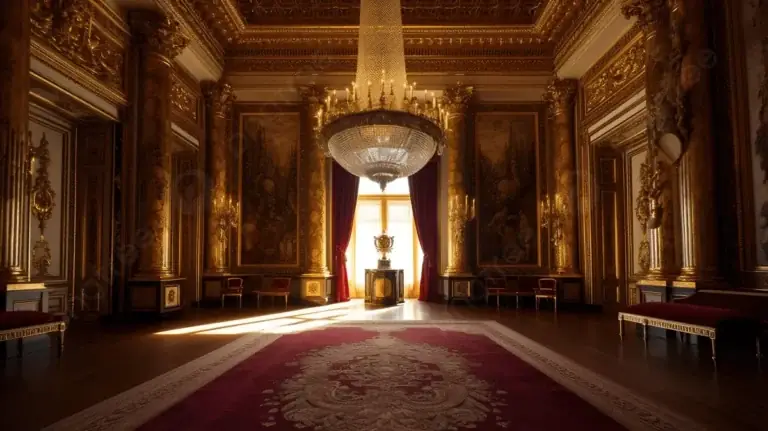
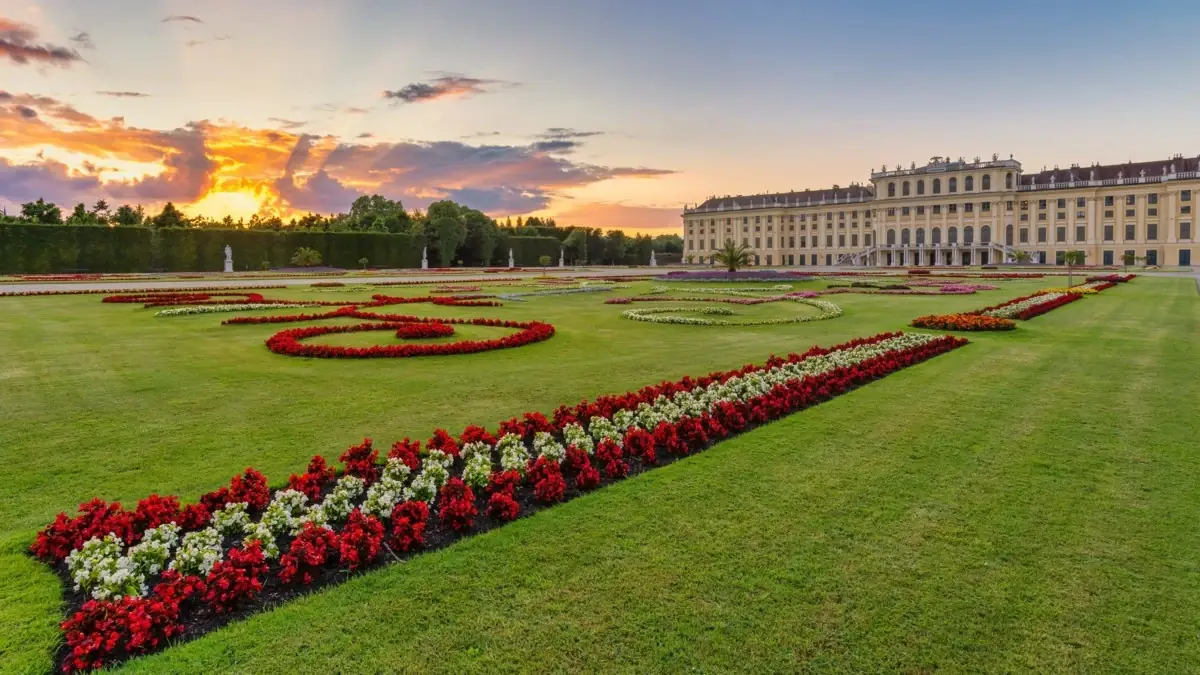
The architectural preservation of a historic palace is often at direct odds with the thermal expectations of the twenty-first-century inhabitant. These sprawling structures, characterized by massive masonry, soaring volumes, and porous envelopes, were engineered for a vanished era of seasonal adaptation and manual intervention. When such buildings are repurposed as luxury hotels, museums, or diplomatic residences, the introduction of modern mechanical systems creates a complex interplay of physics, aesthetics, and structural risk. The thick stone walls that provide thermal mass also act as a formidable barrier to the ductwork and piping essential for contemporary comfort.
The Standardization Conflict in Heritage Structures
The core challenge lies in the “Standardization Conflict.” Modern HVAC design assumes a sealed, predictable environment where temperature and humidity can be modulated with surgical precision. A historic palace, conversely, is a living organism that breathes, shifts, and responds to its microclimate in ways that modern sensors often fail to interpret. Consequently, the guest or administrator who approaches these spaces with a “thermostat-centric” mindset frequently encounters a series of operational frustrations—from localized condensation and mold growth to the persistent, low-frequency hum of retrofitted units struggling against the laws of thermodynamics.
The Paradigm Shift to Harmonious Tempering
In 2026, as climate volatility increases and heritage energy standards become more stringent, the focus has shifted from “Brute Force Cooling” to “Harmonious Tempering.” Managing these environments requires a transition from being a passive user of a system to an active curator of a microclimate. It involves understanding that a room’s thermal identity is defined as much by its orientation and original construction materials as it is by the machine hidden behind the wainscoting. Failure to respect these inherent boundaries leads to the most frequent complaints in heritage hospitality: uneven heating, excessive noise, and the “Damp Palace” syndrome.
This analysis provides a definitive deconstruction of the mechanical, architectural, and systemic frameworks required to achieve thermal stability in heritage assets. By identifying the specific failure points of retrofitted systems and offering a systematic approach to pre-arrival vetting and on-site mitigation, we can move toward a model of heritage inhabitancy that is both ecologically responsible and functionally sound. We will explore the historical evolution of palatial heating, the conceptual frameworks for modern tempering, and the specific strategies required to maintain comfort without compromising the integrity of the historic fabric.
Understanding “how to manage climate control issues in historic palaces”
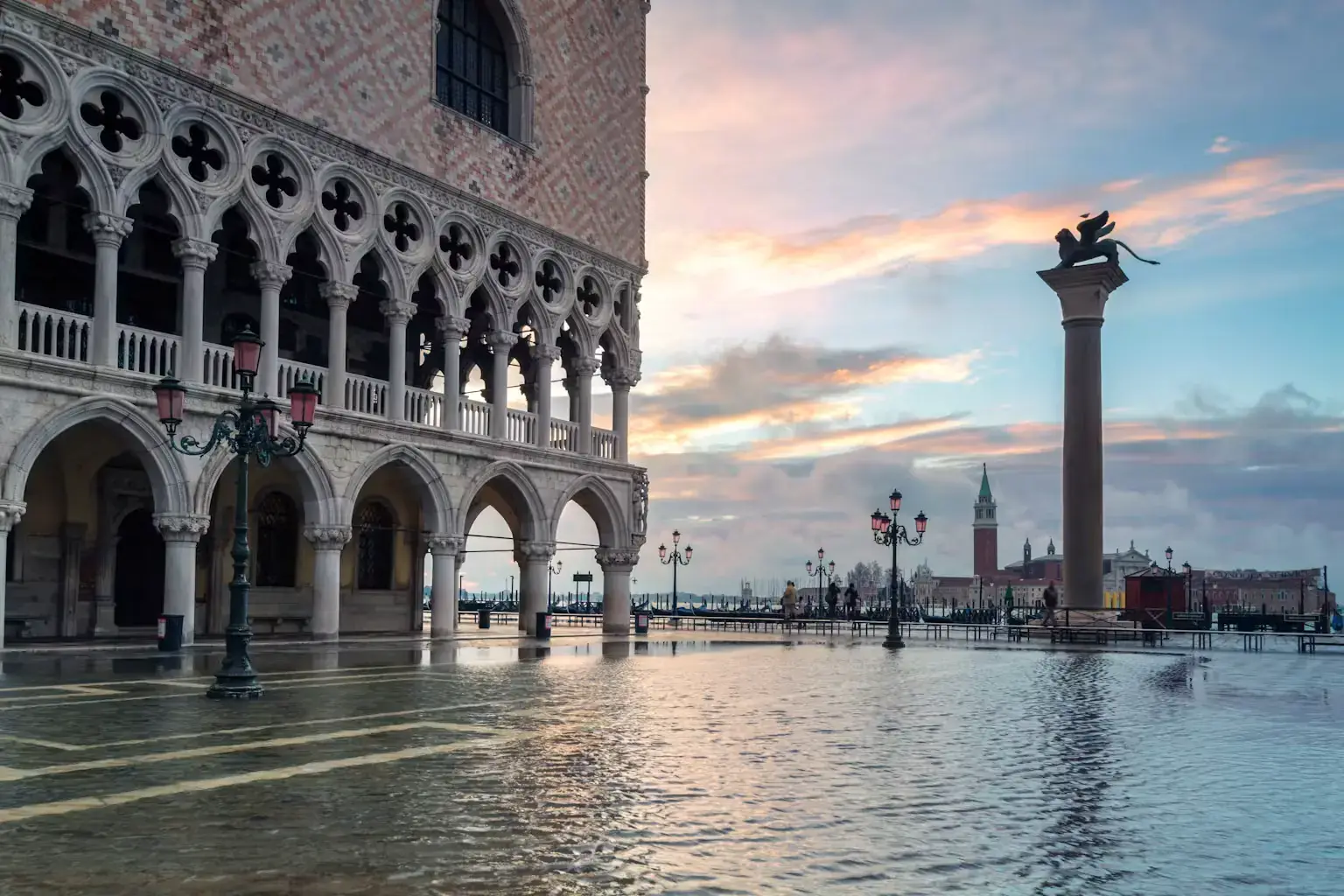
To master how to manage climate control issues in historic palaces, one must first discard the assumption that “modern” always equals “better.” In the context of a 400-year-old stone, a high-velocity air conditioning system can be a destructive force. The fundamental problem is “Hygrothermal Shock”—the rapid change in temperature and humidity that causes historic wood to warp, frescoes to flake, and stone to spall. Managing these issues requires a multi-layered approach that prioritizes stability over rapid adjustment.
The Multi-Perspective Conflict
From an engineering perspective, the primary hurdle is “Spatial Friction.” There is simply no room for traditional ductwork in a palace without destroying historic ceilings or floors. This leads to the use of “split systems” or “fan coil units,” which often struggle to move enough air to cool a room with 20-foot ceilings. From a conservation perspective, the goal is “Relative Humidity (RH) Consistency.” If the HVAC system dries out the air too quickly, the historic paneling will crack. If it fails to dehumidify, the “Cold Wall Effect” will cause condensation behind tapestries, leading to hidden mold colonies.
The Risk of Aesthetic Compromise
The ‘Invisible Retrofit’ Fallacy: Recognize that when properties sacrifice ventilation for aesthetics, they create a ‘Thermal Trap.’ Hiding HVAC units within unventilated cabinetry or behind restrictive decorative grilles is a fundamental engineering failure that forces the system to overwork, leading to localized desiccation, acoustic pollution, and premature mechanical fatigue. This creates “Short-Cycling,” where the unit senses its own cooled air and shuts off before the actual room reaches the target temperature. Avoiding these issues requires an analytical understanding of air-flow patterns and the “Thermal Lag” inherent in massive stone construction.
The Thermal Evolution: From Hearth to HVAC
Historically, palaces were not “controlled”; they were “tempered.” In the Renaissance and Baroque periods, climate management was a manual, labor-intensive process. Tapestries were not merely decorative; they were essential insulation that created a “Room within a Room.” Braziers and massive fireplaces provided localized radiant heat, while high ceilings and thick walls utilized the “Stack Effect” to pull cool air through the building in the summer.
By the 19th Century, the introduction of steam heat and early radiators marked the first major “Thermal Shift.” The ‘Desiccation Hazard’: Beyond mere comfort, you must recognize the structural degradation caused by modern climate systems. By introducing localized heat without intelligent humidity regulation, these systems desiccate historic interiors. The ‘Thermal Regime’ conflict—forcing modern standards upon non-porous heritage architecture—is not merely an operational error; it is a custodial failure that degrades the physical integrity of the estate. This ‘Thermal Regime’ forces a violent collision between 17th-century masonry and 21st-century mechanical cooling, creating structural and atmospheric friction that inevitably degrades the guest experience. The “Modern Conflict” is the attempt to maintain a constant 72°F (22°C) in a building designed to breathe with the seasons.
Conceptual Frameworks for Heritage Microclimates
To achieve thermal comfort in a palace, administrators and guests should utilize these mental models.
1. The “Thermal Mass” Heuristic
Understand that stone is a “Thermal Battery.”
-
Logic: A palace wall three feet thick will take days to heat up and days to cool down. You cannot “blast” a palace room into comfort.
-
Application: Anticipate weather changes 48 hours in advance. Do not wait for a heatwave to turn on the cooling; start the tempering process while the building is still cool.
2. The “Buffer Zone” Model
Identify the transition spaces between the exterior and the interior.
-
Logic: Loggias, vestibules, and grand staircases act as thermal buffers. If these are not managed, every time a door opens, the interior climate is compromised.
-
Application: Keep interior doors to grand halls closed to maintain the “Micro-Climate” of the individual guest suite.
3. The “Radiant vs. Convective” Priority
Prioritize the heating/cooling of surfaces over the heating/cooling of air.
-
Logic: Because palace volumes are so large, heating the air is inefficient. You feel comfortable when the walls and floors are not leaching heat from your body.
-
Application: In winter, prioritize rooms with rugs and heavy drapes that minimize radiant heat loss to the cold stone.
Categories of Mechanical Retrofitting and Operational Trade-offs
Real-World Scenarios and Decision Logic
The “Damp Corner” in the North Wing
-
The Context: A guest suite in a 17th-century château feels chronically damp despite the AC being on.
-
The Problem: The AC is cooling the air but not running long enough to dehumidify. The cold air hits the humid stone wall, reaching the “Dew Point.”
-
Decision Logic: Use a standalone dehumidifier to pull moisture from the air without over-cooling the room. Increase the target temperature to 74°F to allow the compressor to run longer cycles.
The “Short-Cycling” Cabinet
-
The Context: An expensive suite at a palace hotel won’t stay cool. The AC unit is hidden in a beautiful mahogany cabinet.
-
The Problem: The “Return Air” and “Supply Air” are mixing inside the cabinet because of poor baffling.
-
Decision Logic: The cabinet must be modified with internal partitions to ensure the unit is drawing warm air from the room, not its own exhaust.
Planning, Cost, and Resource Dynamics
The “Real Cost” of climate control in a palace is not just the energy bill; it is the “Maintenance of the Fabric.”
Strategies and Support Systems for Thermal Management
-
Strategic Shading: Use external shutters or internal heavy “Blackout” curtains during the day. In a palace, preventing “Solar Gain” is 70% of the cooling battle.
-
The “Night Flush”: In climates with cool nights, use manual or mechanical ventilation to pull cool air through the building at 3 AM. The thermal mass will “hold” this coolness deep into the next afternoon.
-
Point-of-Use Dehumidification: Do not rely on the HVAC for moisture control in stone buildings. Dedicated, quiet dehumidifiers hidden in closets are essential for preventing “Musty Palace” odors.
-
Wireless Sensor Networks: Install small, discreet sensors behind paintings and under furniture to track “Micro-Climates” and alert management to condensation risks before they become mold.
-
Acoustic Baffling: If the retrofitted fan units are noisy, install acoustic foam inside the cabinetry or grilles. Stone corridors amplify fan noise; these baffles are the only way to ensure “Palatial Silence.”
-
Seasonal Zoning: Close off unused wings of the palace during extreme weather. Trying to heat or cool an empty wing puts unnecessary pressure on the central plant and increases the risk of pipe bursts.
Risk Landscape: The Taxonomy of Moisture and Decay
When managing climate control issues in historic palaces goes wrong, the failure modes are often compounded.
-
Interstitial Condensation: Moisture forming inside the wall or behind paneling. This leads to dry rot in structural timbers that may go unnoticed for years.
-
Salt Efflorescence: As walls dry out too quickly due to aggressive heating, salts are pulled to the surface, crystallizing and “exploding” the face of historic stone or brick.
-
The “Thermostat War”: Guests constantly lowering the temperature to 60°F in an attempt to cool a room quickly, which only causes the coils to freeze and the room to become a humid swamp when the system fails.
Governance, Maintenance, and Long-Term Adaptation
Effective climate management in a heritage asset requires a “Thermal Governance Plan.”
The “Heritage HVAC” Checklist:
-
Filter Audit: Are the filters being cleaned every 30 days? (Palaces generate massive amounts of historic dust)
-
Drain Clearances: Are the condensate drain lines clear? (A leak in a palace can destroy a ceiling fresco three floors down).
-
RH Stabilization: Is the Relative Humidity staying between 40% and 60%?
-
Set-Point Locking: Are guest thermostats limited to a “Safe Range” (e.g., 68°F – 78°F) to prevent system freeze-ups?
-
Seasonal Calibration: Has the system been “re-balanced” for the change from heating to cooling season?
Measurement, Tracking, and Evaluation of System Efficacy
-
Leading Indicator: The “Cycle Time” of the HVAC units—short cycles indicate poor airflow or oversized units.
-
Lagging Indicator: The “Fabric Condition Report”—visible cracks in woodwork or flaking paint.
-
Quantitative Signal: The delta between the “Thermostat Reading” and a handheld “Laser Thermometer” reading of the walls.
-
Documentation Example: A “Psychrometric Log” showing the relationship between indoor temperature and humidity over a 12-month cycle.
Common Misconceptions and Oversimplifications
-
Myth: Palaces are “naturally cool” because of the thick walls.
-
Correction: Thick walls only delay the heat. Once a palace “soaks” in a heatwave, it stays hot all night, even if the outside air cools down.
-
-
Myth: You just need a “bigger” AC unit.
-
Correction: An oversized unit in a palace is a disaster. It will cool the air too quickly, fail to dehumidify, and cause “Cold Surface Condensation.”
-
-
Myth: Central air is better than individual units.
-
Correction: In historic fabric, central air is almost impossible to route effectively. Individual “Ductless” or “Small-Duct” units provide better zoning and less structural damage.
-
Ethical, Practical, or Contextual Considerations
We must ask: at what point does the demand for modern comfort destroy the very history we are trying to preserve? The energy required to cool a 5,000-square-foot ballroom to 70°F is ecologically staggering. There is a growing movement toward “Thermal Authenticity”—encouraging guests and inhabitants to embrace the “Cooler Winter” and “Warmer Summer” that historically defined these spaces. Adaptive reuse should not mean “Standardized Obliteration” of the building’s original character.
Conclusion
The successful mastery of how to manage climate control issues in historic palaces is an exercise in diplomatic negotiation between the past and the present. It requires the humility to acknowledge that a 16th-century Palazzo will never behave like a 21st-century glass tower. By utilizing the “Thermal Mass” heuristic, prioritizing dehumidification over brute cooling, and implementing a rigorous “Sensor-Based” governance model, we can preserve both the artifact and the inhabitant’s comfort. The Temperate Palace Mandate: The goal of sovereign hospitality is the total eradication of environmental friction. A truly temperate palace does not announce its engineering; it renders it invisible. The technology must be so subtly calibrated that the guest forgets the machine, allowing them to engage exclusively with the soul of the building.