Best Palace Stay in the US: Gilded Age Estates & Historic Luxury
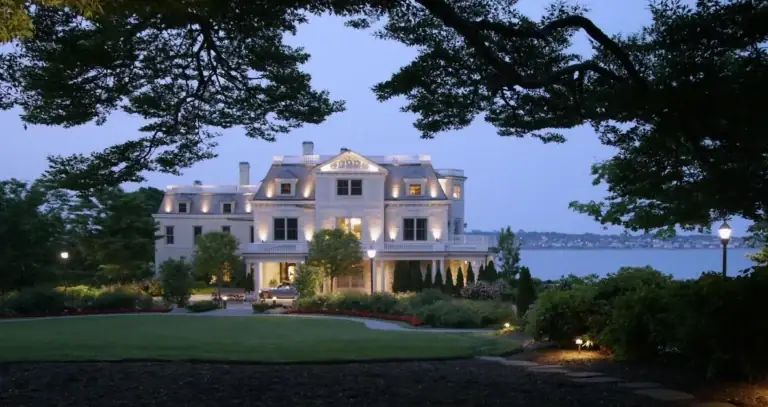
The concept of a palace stay in the United States requires navigating a fundamental paradox. Unlike Europe or Asia, where palatial hospitality involves the adaptive reuse of structures built by sovereign monarchs or feudal nobility, the American equivalent emerged from a completely different socio-economic landscape. The closest architectural analogs to palaces within the United States are the monumental residential estates constructed during the Gilded Age, the industrial boom of the late nineteenth and early twentieth centuries, and the grand resort hotels commissioned by railroad magnates. These structures were designed not to house heads of state, but to broadcast the financial dominance, cultural ambition, and social ascendancy of America’s industrial elite.
Defining the Authentic American Palace Stay
Consequently, identifying the best palace stay in the US involves looking beyond superficial luxuries to evaluate how successfully a property preserves its original architectural scale, institutional history, and cultural integrity. It requires distinguishing between a true historic estate transformation and a modern luxury hotel that merely applies palatial aesthetics. A genuine American palace stay must occupy a structure originally built to a monumental, non-commercial scale, featuring architectural craftsmanship that cannot be replicated under modern economic constraints. It must also feature an operational model that honors its structural history while providing contemporary infrastructure.
For the modern traveler, institutional investor, or cultural preservationist, evaluating these properties involves analyzing a complex mix of historic preservation law, specialized facility management, and high-end hospitality economics. These estates operate under stringent regulatory frameworks, often balancing the requirements of the National Register of Historic Places with the high expectations of luxury hospitality. This analysis looks past the marketing language of luxury travel to provide a comprehensive framework for assessing, planning, and executing an authentic palatial estate stay within the United States.
Understanding “best palace stay in the US.”
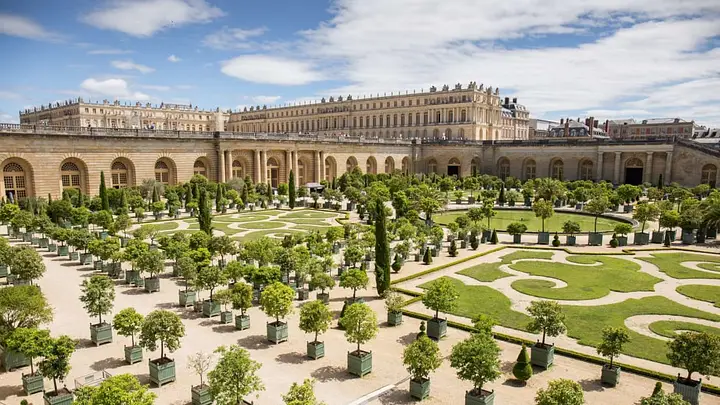
To objectively determine what constitutes the best palace stay in the US, one must first dismantle the oversimplification that “palatial” is merely a synonym for “expensive” or “highly rated.” In standard travel journalism, properties are routinely labeled as palaces based on five-star ratings, high staff-to-guest ratios, or the presence of crystal chandeliers and marble lobbies. This consumer-centric view obscures the structural, historical, and operational realities that define an authentic palatial experience within an American context.
The Core Criteria for Institutional Authenticity
From an institutional perspective, an authentic palatial stay must satisfy three core criteria:
-
Scale and Architectural Authenticity: The physical plant must be a historic structure originally commissioned as a monumental private residence or an elite, self-contained grand resort during a defined historical era of unconstrained craftsmanship (typically 1865–1930). The stone masonry, plaster work, hand-carved millwork, and landscape architecture must reflect artisan techniques that are economically unfeasible to replicate today.
-
Historical Provenance: The estate must possess a documented lineage tied to significant figures or socio-economic movements in American history. The narrative of the property must be preserved within its physical spaces, museum-grade collections, and archival records, rather than invented by a contemporary marketing agency.
-
Institutional Preservation: The operational model must actively maintain the structural integrity of the asset. The guest experience should feel like an immersive encounter with an intact historic environment, where modern hospitality systems (such as HVAC, plumbing, and data connectivity) are seamlessly integrated without altering the building’s historic character.
The Pitfalls of Superficial Evaluation
The risk of relying on superficial evaluation metrics is clear when comparing a genuinely historic estate with a newly built luxury resort designed in an old-world style. A modern replica can offer flawless climate control, acoustic isolation, and standardized layouts, but it lacks the cultural weight, historical patina, and unique architectural variance of an authentic estate.
Conversely, evaluating historic properties solely on modern hospitality metrics can penalize the very structural idiosyncrasies—such as non-standard room layouts, original single-pane fenestration, or historic spatial configurations—that provide their authentic value. Therefore, analyzing the best palace stay in the US requires an evaluation framework that balances structural authenticity with contemporary operational standards.
Deep Contextual Background
The evolution of monumental residential and resort architecture in the United States is directly tied to the country’s rapid industrialization following the Civil War. As the American economy shifted from agrarian capitalism to an industrial powerhouse driven by rail, steel, banking, and manufacturing, an unprecedented concentration of private wealth emerged. The architects of this wealth sought to legitimize their newly acquired status by building domestic estates that rivaled the ancestral seats of European royalty.
This architectural movement was led by American architects trained at the École des Beaux-Arts in Paris, most notably Richard Morris Hunt, McKim, Mead & White, and Horace Trumbauer. These individuals imported European architectural styles—including French Renaissance Châteauesque, Italian Renaissance Revival, English Tudor, and Spanish Mediterranean Revival—and adapted them to the grand scale demanded by their clients. This period transformed regions like Newport, Rhode Island; the Hudson Valley, New York; the Gold Coast of Long Island; and Asheville, North Carolina into landscapes dominated by monumental stone, intricate ironwork, and formal European gardens.
The Shift to Institutional Adaptive Reuse
The economic landscape supporting these massive private estates collapsed under the weight of the 1929 market crash, the introduction of the federal income tax via the Sixteenth Amendment in 1913, and the subsequent rise of marginal tax rates. By the mid-twentieth century, the cost of maintaining a household staff of dozens, alongside the heating, maintenance, and property tax burdens of a 50,000-square-foot limestone residence, made private ownership unsustainable.
While many of these structures were demolished or abandoned, a select few survived through adaptive reuse. They transitioned into institutional ownership, serving as schools, religious retreats, public museums, or luxury hotels. Those who entered the luxury hospitality sector represent the modern landscape of American palace stays. This transition required structural modifications to insert modern bathrooms, fire suppression infrastructure, and climate control into historic structures, all while adhering to evolving local, state, and federal historic preservation standards.
Conceptual Frameworks and Mental Models
To systematically evaluate and select the best palace stay in the US, advisors and travelers can use several specific conceptual frameworks. These mental models help cut through marketing imagery to assess the true nature of a property’s historic and luxury offering.
The Spatial-Authenticity Matrix
This framework evaluates a property across two distinct axes: Structural Fidelity (how much of the original layout, material, and craftsmanship remains intact) and Operational Integration (how effectively the property functions as a modern luxury hotel).
-
High Fidelity / High Integration: The gold standard. Guests occupy authentic historic rooms where modern infrastructure is entirely concealed behind original wood paneling or plasterwork.
-
Low Fidelity / High Integration: A property that retains a historic facade but has completely gutted and modernized its interior. It operates smoothly as a hotel but lacks architectural authenticity.
-
High Fidelity / Low Integration: A museum-like environment where preservation takes such strict precedence that guest comfort is compromised (e.g., inadequate climate control, outdated plumbing, poor acoustic privacy).
The Wealth-Origin Architecture Archetype
Understanding why a structure was built explains its spatial layout and modern guest flow. This model categorizes properties by their original socio-economic purpose:
-
The Dynasty Estate: Built by a single family as a private monument to their lineage (e.g., Vanderbilt, Astor, or DuPont estates). These offer deep historical immersion but often present challenges for hotel conversions due to a limited number of original master bedrooms, leading to varied room configurations.
-
The Enclave Resort: Built by railroad or industrial syndicates to house hundreds of elite families simultaneously during a specific season (e.g., the grand historic mountain or coastal resorts of the late nineteenth century). These features inherently have hospitality-driven layouts, massive public spaces, and symmetric room structures, but they can sometimes feel less like an exclusive private palace and more like a historic institution.
The Preservation-Utility Trade-off Boundary
This model recognizes that every historic property operates under a strict compromise between strict historic preservation and modern guest utility.
If local preservation easements forbid any alteration to original lath-and-plaster walls, the property cannot easily install modern acoustic insulation between rooms. Guests must understand that selecting a property with maximum historic preservation often means accepting certain structural limitations, such as historic windows that allow slight drafts or traditional room layouts that lack open-concept configurations.
Key Categories or Variations
The landscape of American palatial hospitality is not uniform. It is divided into distinct structural and geographic categories, each with its own architectural style, historical focus, and distinct operational trade-offs.
1. Gilded Age Northern Châteaux and Castles
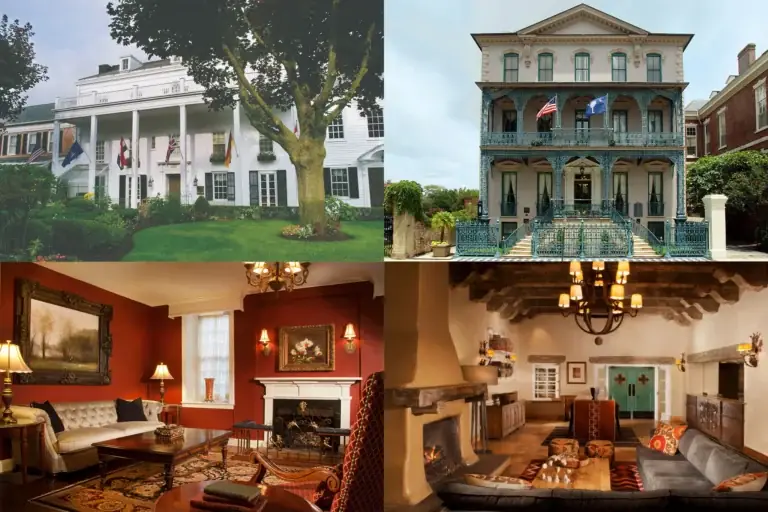
Located primarily in the Northeast—specifically the Gold Coast of Long Island, the Hudson Valley, and coastal New England—these properties are modeled after French Châteaux or English castles. They feature heavy stone construction, slate roofs, towers, and extensive formal gardens.
-
Trade-offs: Deep historical authenticity and impressive architecture, but they are often subject to strict historical easements that can limit contemporary updates to rooms or additions of large modern spa facilities.
2. Southern Plantation-Era and Mountain Manors
Found throughout the American South and the Blue Ridge Mountains, these estates often showcase Neoclassical, Greek Revival, or large-scale Tudor Revival architecture. They emphasize sweeping verandas, grand porticos, and expansive pastoral grounds.
-
Trade-offs: Exceptional spatial layouts and integration with nature, but navigating the complex and sensitive historical narratives of these estates requires careful editorial nuance and respectful programming.
3. Great Lakes and Wilderness Baronial Lodges
Commissioned by midwestern industrial magnates, these structures utilized raw timber, monumental fieldstone, and rustic artisan techniques to create an American interpretation of Swiss chalets or Scottish hunting lodges on a massive scale.
-
Trade-offs: Incredible acoustic warmth and a unique connection to the natural landscape, but the design language leans heavily toward rustic grandeur rather than classical European refinement.
4. Spanish and Mediterranean Revival Western Palaces
Developed in Florida, the American Southwest, and Southern California during the early twentieth century, these properties feature stucco walls, terracotta tile roofs, open-air inner courtyards, and intricate tile work.
-
Trade-offs: Seamless indoor-outdoor integration and excellent climate resilience, but they lack the heavy masonry and classical formal interiors found in northeastern estates.
5. Urban Beaux-Arts Landmark Hotels
These are monumental hotels built in major metropolitan centers during the early 1900s to serve as the social hubs for high society. They feature grand ballrooms, vaulted ceilings, and extensive gold-leaf detailing.
-
Trade-offs: Unmatched proximity to urban cultural institutions and highly standardized luxury service, but they lack the private acreage, manicured estate grounds, and secluded atmosphere of rural palatial properties.
The following table provides a comparative breakdown of these property types to assist in structural evaluation:
To understand how these properties function in practice, we can analyze several realistic operational and guest scenarios. These highlight the interplay between historic structures and luxury execution.
Scenario 1: The Multi-Generational Family Takeover
A family rents an entire Gilded Age estate in the Northeast for a private event. The property features original 1910 limestone architecture, museum-grade tapestries in the dining hall, and a converted carriage house for additional guest rooms.
-
The Challenge: The family expects identical luxury amenities across all rooms, but the main house features original, varied layouts where the master suite is four times the size of the original family rooms.
-
The Failure Mode: The property attempts to resolve this by adding modern partition walls to subdivide secondary rooms. This violates local historic preservation guidelines and ruins the architectural proportions of the space, leading to poor acoustic privacy and guest complaints.
-
The Second-Order Effect: The strain on the property’s vintage electrical grid from hosting multiple high-demand events simultaneously trips circuit breakers, temporarily disabling the climate control systems across an entire wing.
Scenario 2: The High-Profile Corporate Retreat at a Western Palace
A technology firm books a Mediterranean Revival estate in California for a private strategy retreat. The event requires high-speed data connectivity and complete privacy for sensitive business discussions.
-
The Challenge: The property’s thick coquina and concrete walls completely block modern cellular and wireless signals. Additionally, the historic, open-air central courtyard layout allows sound to carry easily between spaces.
-
The Failure Mode: Staff run visible Ethernet cables along historic loggias and attach wireless routers to decorative plaster walls using standard adhesives, causing surface damage to the historic finishes. Meanwhile, confidential conversations from the courtyard carry into adjacent public rooms.
-
The Second-Order Effect: Repairing the damaged plaster requires bringing in specialized art restorers, which takes those historic rooms out of service for weeks and hurts the property’s bottom line.
Scenario 3: The Winter Stay at a Wilderness Baronial Lodge
An international traveler books a premier suite at a fieldstone and timber lodge in the Pacific Northwest during a heavy winter storm. The guest expects consistent heating and standard five-star room service.
-
The Challenge: The historic lodge relies on a combination of radiational steam heat and original wood-burning fireplaces. The heavy snowfall slows down deliveries and strains the property’s remote supply lines.
-
The Failure Mode: The heating system produces uneven temperatures, leaving the bedroom exceptionally warm while the bathroom remains cold due to historic single-pane window configurations. The kitchen is forced to alter its menu because specialized ingredients cannot reach the remote location.
-
The Second-Order Effect: The guest experiences an inconsistent stay that conflicts with the property’s luxury branding, highlighting the operational challenge of managing a historic wilderness property in extreme weather.
Planning, Cost, and Resource Dynamics
The economics of booking and executing a stay at a premier palatial estate are fundamentally different from those of standard luxury hotels. Rates are heavily influenced by the high fixed costs of historic property preservation, specialized labor requirements, and seasonal demand.
Direct and Indirect Financial Outlays
When analyzing the cost of a palace stay, expenditures fall into clear categories:
-
The Base Room Rate: This fee covers lodging and grants access to the estate’s preserved public rooms and grounds. This rate incorporates the cost of continuous historic maintenance, insurance for high-value architectural assets, and specialized property taxes.
-
The Historic Preservation Surcharge: Many properties add a mandatory conservation fee to bookings. This money goes directly into dedicated funds for structural restoration, artifact preservation, and maintaining historic gardens.
-
The Operational Logistics Premium: Private dining, bespoke tours, and curated estate activities require high staff-to-guest ratios and specialized expertise, such as hiring staff historians or equestrian experts.
Value Variability and Seasonality
The value proposition shifts dramatically based on seasonal timing. During peak seasons, these properties command premium rates while running at full capacity, which can change the exclusive, residential feel of the estate. Conversely, shoulder seasons often offer better financial value and a quieter atmosphere, though guests may encounter scheduled maintenance projects or limited access to outdoor grounds.
The following table outlines standard cost ranges and resource commitments across different tiers of palatial stays within the United States:
Tools, Strategies, and Support Systems
Executing a flawless stay within an American palace requires specific tools, resources, and strategies to bridge the gap between historic architecture and modern traveler expectations.
1. Historic Property Registries and Archives
Before booking, advisors can consult the National Register of Historic Places archives and state historic preservation office records. These databases offer detailed histories of a property’s original construction, renovations, and architectural significance, allowing travelers to verify the authenticity of an estate.
2. Specialized Travel Consortia
Booking through networks that specialize in historic luxury properties (such as Historic Hotels of America or specialized luxury asset groups) provides access to vetted properties. These organizations require members to maintain documented historical integrity and meet specific luxury service standards.
3. Room-Specific Architectural Layout Audits
Because historic estates feature non-standard floor plans, standard room categories (“Deluxe King,” “Luxury Suite”) can be misleading. Requesting a property’s original architectural floor plan allows guests to review exact room dimensions, ceiling heights, window placements, and proximity to original service stairs or mechanical shafts.
4. Microclimate and Acoustic Pre-Tuning
Guests sensitive to temperature changes or noise can ask the property’s guest relations team to optimize room settings before arrival. This includes setting up localized humidification systems, adjusting radiator valves, and strategically placing acoustic dampening elements to manage the natural sounds of a historic building.
5. Archival Curatorial Briefings
To fully appreciate an estate stay, guests can arrange for private tours led by the property’s resident curator or archivist. These briefings provide structural context on the building’s artwork, furniture collections, and architectural details, turning a standard hotel stay into an immersive historical experience.
Risk Landscape and Failure Modes
Operating or staying within a converted historic palace involves managing an array of unique risks. These step-by-step failures can quickly compromise both the structural integrity of the asset and the quality of the guest experience.
1. The Operational Continuity Breakdown
This failure occurs when a property fails to properly train contemporary hospitality staff on the care and handling of a historic building.
2. The Infrastructure Failure Chain
This risk involves trying to run modern, high-draw luxury amenities within a historic structure that has outdated underlying mechanical systems.
-
The Trigger: A property installs modern high-pressure rain showers into historic guest bathrooms without fully updating the building’s original drainage stack.
-
The Progression: The increased water volume overflows the old cast-iron piping, causing water to seep into the floors below.
-
The Impact: This moisture compromises original decorative plaster ceilings in the public salons beneath the guest rooms, resulting in costly structural repairs and disrupted stays.
3. The Preservation Over-Restriction Trap
This failure happens when an estate’s historic preservation guidelines prevent the property from making essential modern updates.
-
The Trigger: Strict local historical covenants forbid any modifications to an estate’s original windows or exterior stonework.
-
The Progression: The property cannot install double-paned insulated glass or modern exterior weather sealing, leaving rooms drafty and exposed to outdoor noise during seasonal storms.
-
The Impact: Guests experience uncomfortable drafts and noise transfer, which can hurt the property’s reputation as a premium luxury destination despite its historical authenticity.
Governance, Maintenance, and Long-Term Adaptation
The long-term success of an American palace hotel depends on its governance structure and maintenance practices. Unlike modern commercial buildings, historic structures require continuous care and specialized maintenance programs to prevent deterioration.
Cyclical Structural Inspections
Properties must establish rigid, calendar-driven review cycles to monitor the health of their historic structure. These protocols are designed to catch and address potential issues before they cause significant damage:
-
Bi-Annual Exterior Envelope Audits: Every spring and autumn, engineers must inspect the roof tiles, flashing, pointing, and window frames to ensure water cannot penetrate the building’s shell.
-
Quarterly Mechanical and Plumbing Scans: Using thermal imaging and acoustic sensors, maintenance teams must check original wall shafts for early signs of pipe corrosion or electrical overheating without opening historic plaster walls.
-
Continuous Environmental Monitoring: Public salons housing historic tapestries, oil paintings, and original millwork require constant temperature and humidity tracking to prevent wood warping or textile degradation.
Measurement, Tracking, and Evaluation
Evaluating the success of a palace stay requires monitoring a combination of operational metrics and qualitative indicators. These markers show whether a property is successfully balancing luxury hospitality with historical preservation.
Leading vs. Lagging Performance Indicators
A leading indicator acts as an early warning system. It signals potential structural or service issues before they affect guests. For example, tracking minor pressure drops in a historic heating system reveals pipe scale buildup. This allows teams to fix the issue before a room’s climate control fails.
Conversely, a lagging indicator measures outcomes after an event has occurred. Guest reviews provide valuable insights into comfort and historical authenticity. However, they are lagging indicators. They only reveal service or structural breakdowns after a guest has already experienced them.
Documentation and Verification Examples
Well-managed historic properties document their maintenance and preservation efforts through clear, auditable records:
Example 1: Room Climate Stability Log
-
Metric: Relative Humidity (RH) variance in the Master Library Suite over 30 days.
-
Target: RH.
-
Purpose: Prevents the cracking of the original 1895 walnut paneling while ensuring a comfortable environment for guests.
Example 2: Artisanal Masonry Maintenance Record
-
Metric: Compressive strength testing of lime-based replacement mortar used on a historic terrace.
-
Standard: Must match the low-PSI flexibility of the original 1902 mortar formulation.
-
Purpose: Prevents structural damage to historic brickwork caused by modern, overly rigid Portland cement mixes.
Example 3: Acoustic Isolation Verification
-
Metric: Decibel attenuation (STC rating) between adjacent historic guest chambers.
-
Target: Minimum 45 dB reduction.
-
Purpose: Verifies that non-invasive acoustic panels hidden behind fabric wall coverings are effectively providing modern privacy.
Common Misconceptions and Oversimplifications
Myth 1: True American palaces must have a royal lineage.
-
Correction: The United States has no native royal history. The properties that function as palaces were built by industrial and financial titans during the country’s economic expansion. Their historical significance stems from industrial heritage rather than royal decrees.
Myth 2: Older structures always offer a less comfortable guest experience.
-
Correction: While historic buildings present unique engineering challenges, properties that invest in advanced, concealed infrastructure can deliver comfort that matches or exceeds modern luxury resorts.
Myth 3: A property labeled as a “castle” or “palace” is fully historic.
-
Correction: Many properties use these terms purely as marketing labels. A true palatial stay requires a verified historic structure built to a monumental scale. It cannot simply be a modern building featuring classical design elements.
Myth 4: Strict historic preservation prevents any modern technology updates.
-
Correction: Modern historic preservation emphasizes innovative, non-destructive installation techniques. Technologies like wireless control systems and slimline ducting allow properties to add contemporary amenities without altering historic architecture.
Myth 5: Formal gardens and grand public rooms are purely decorative spaces.
-
Correction: In classic estate design, landscapes and public salons were engineered as functional spaces to manage wind patterns, optimize natural light, and guide social interactions. They remain central to the layout and flow of the property.
Myth 6: High room rates at historic estates are driven entirely by profit margins.
-
Correction: The rates at genuine historic properties are heavily influenced by the high fixed costs of artisan masonry, specialized conservation labor, structural insurance, and compliance with historic preservation guidelines.
Ethical, Practical, and Contextual Considerations
Operating a historic estate as a modern luxury hotel involves navigating a complex landscape of social and practical responsibilities. Property owners and guests must consider how these grand estates fit into contemporary society. This is especially vital for properties with difficult histories. Many were built on wealth inequality or labor exploitation. Addressing these historical realities requires a transparent, honest presentation rather than romanticizing or rewriting the past.
Practically, these properties must balance luxury hospitality with environmental sustainability. Heating a 60,000-square-foot stone castle creates a massive carbon footprint. Maintaining hundreds of acres of formal gardens also strains water resources. Furthermore, historic guidelines often forbid standard exterior insulation or visible roof solar panels. To adapt, engineers must innovate. Solutions include hiding geothermal heating loops beneath lawns or installing discreet greywater recycling systems. These methods sustain the estate without straining local resources.
Conclusion
Finding the best US palace stay requires a unique understanding. You must look at how historic architecture, preservation economics, and luxury hospitality intersect. Authentic American palaces are not built on modern, standardized templates. Instead, these unique historical assets reflect the industrial ambition and craftsmanship of their eras. Their value lies in their structural fidelity, unique spatial layouts, and the immersive historical environment they offer.
Travelers, advisors, and preservationists must recognize that historic character and modern luxury are not mutually exclusive. This balance does not happen by accident. We mandate it through rigorous audit protocols, engineering, and uncompromising property management. By looking past surface-level luxury branding, we evaluate true structural authenticity and operational planning. This rigorous framework ensures guests experience the grandeur of America’s past alongside contemporary comfort.